Latest Digital Marketing Trends in 2026 | Future of Smart Marketing
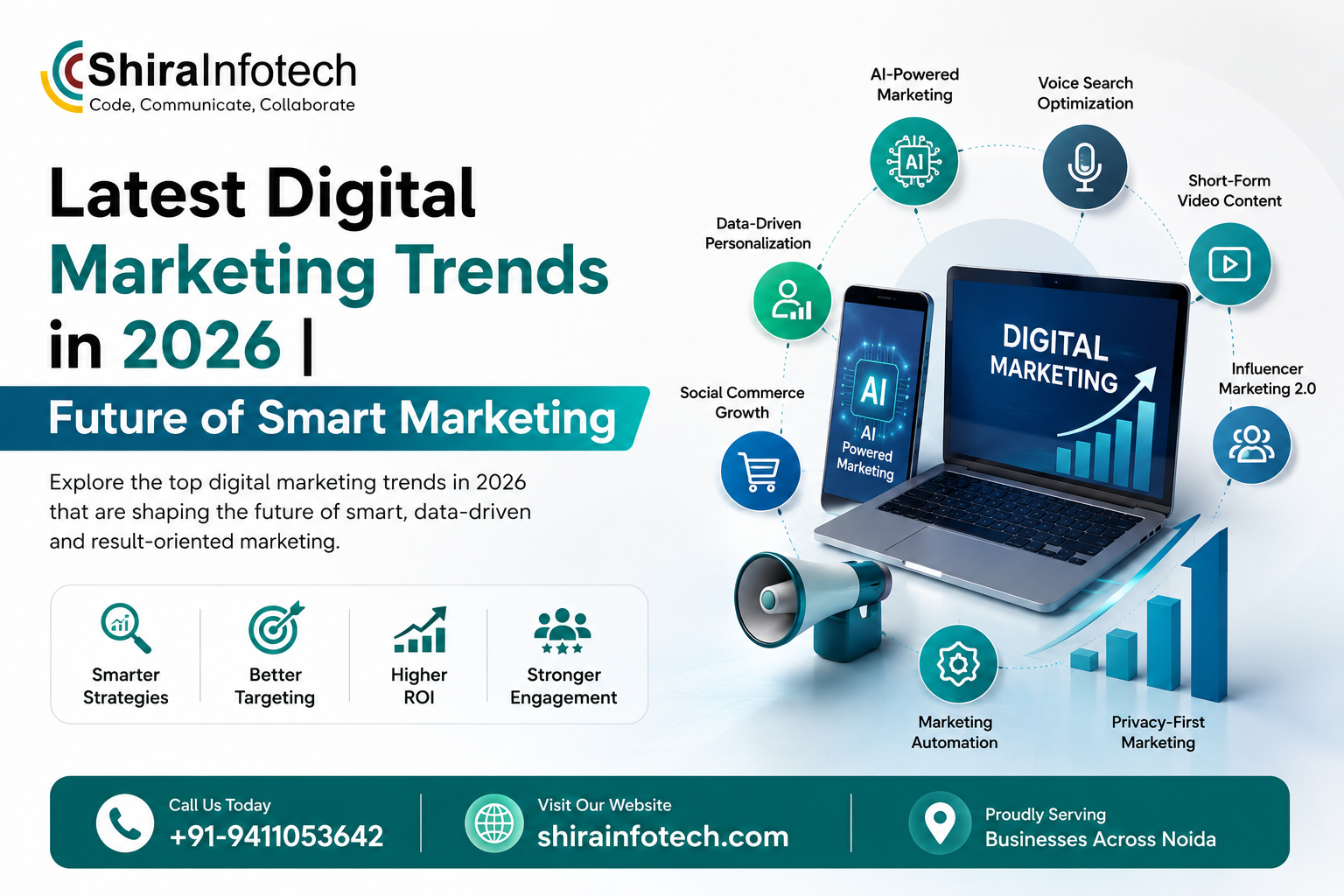
Latest Digital Marketing Trends in 2026 | Future of Smart Marketing
Digital marketing is evolving faster than ever before. What worked a few years ago is no longer enough to attract, engage, and convert modern consumers. Businesses today must move beyond traditional advertising and adopt smarter, faster, and more personalized strategies to stay competitive.
In 2026, digital marketing is no longer just about running ads or posting on social media. It is about creating meaningful customer experiences, using artificial intelligence, building trust, and being visible across multiple digital touchpoints. Search behavior is changing, content consumption is shifting, and customer expectations are higher than ever.
From AI-powered personalization and short-form video dominance to creator marketing, privacy-first strategies, and Generative Engine Optimization (GEO), the latest digital marketing trends are transforming how brands connect with their audiences.
According to recent industry reports, AI-powered personalization, short-form video, creator influence, and social commerce continue to lead marketing strategies in 2026, while brands are also focusing more on authentic human-centered content and privacy-first customer engagement.
This article explores the most important latest digital marketing trends in 2026, how they are shaping the future of business growth, and what companies must do to stay ahead.
Why Digital Marketing Trends Matter
Technology changes fast, but customer behavior changes even faster.
Consumers today want:
- Faster answers
- Personalized experiences
- Authentic brand communication
- Mobile-first content
- Trustworthy recommendations
- Seamless buying journeys
Businesses that adapt to these expectations grow faster, while those using outdated strategies struggle to stay relevant.
Digital marketing trends help businesses:
- Improve visibility
- Increase conversions
- Reduce customer acquisition costs
- Build stronger customer loyalty
- Generate better ROI
- Stay ahead of competitors
This makes trend adoption a business necessity, not an option.
1. AI-Powered Marketing is Now Essential
Artificial Intelligence is no longer a future concept—it is the foundation of modern marketing.
AI is helping businesses automate repetitive tasks, improve targeting, personalize campaigns, and make faster decisions.
Where AI is used most:
- Content creation
- Email marketing automation
- Customer segmentation
- Predictive analytics
- Ad optimization
- Chatbots and customer support
- Product recommendations
Brands are using AI to deliver highly personalized experiences instead of generic marketing messages.
Gartner and other 2026 trend reports highlight AI-powered personalization as one of the strongest marketing drivers this year.
Why it matters:
Customers respond better when content feels relevant to their needs.
This increases:
- Engagement
- Click-through rates
- Sales conversions
- Customer retention
AI helps marketers work smarter, not harder.
2. Short-Form Video Still Dominates
Video continues to be the king of digital engagement.
Platforms like:
- Instagram Reels
- YouTube Shorts
- TikTok
- Facebook Reels
- LinkedIn Video Shorts
are driving massive engagement across industries.
Short-form videos work because attention spans are shorter and mobile usage is higher than ever.
Best-performing short-form content:
- Behind-the-scenes videos
- Product demonstrations
- Customer testimonials
- Educational tips
- Industry insights
- Quick problem-solving videos
HubSpot data also shows marketers continue investing heavily in short-form video due to strong ROI.
Why it matters:
Short-form video improves:
- Reach
- Engagement
- Brand trust
- Lead generation
Brands that ignore video lose visibility quickly.
3. Generative Engine Optimization (GEO) is Replacing Traditional SEO
Search is changing rapidly.
People are no longer searching only on Google—they are also using:
- ChatGPT
- Google AI Overviews
- Bing Copilot
- Voice assistants
- Visual search tools
This means businesses must optimize not just for search engines, but also for AI-generated answers.
This trend is often called:
Generative Engine Optimization (GEO)
It focuses on making content easy for AI systems to understand and cite.
GEO requires:
- Clear structured content
- Strong FAQs
- Schema markup
- Answer-focused writing
- Authority-based content
- High trust signals
Reports in 2026 show AI-generated summaries are increasingly shaping how users discover brands.
Why it matters:
If AI tools do not recognize your content, users may never find your business.
SEO is evolving into visibility optimization.
4. Creator Marketing is Growing Faster Than Influencer Marketing
Traditional influencer marketing is changing.
Consumers trust creators more than celebrities.
People want:
- Expertise
- Real experiences
- Honest opinions
- Community-driven recommendations
This is why creator marketing is growing faster.
Brands now work with:
- Micro-influencers
- Niche creators
- Industry professionals
- Internal brand experts
- UGC creators
Even major brands are increasing creator spending significantly in 2026.
Why it matters:
Creator-led marketing builds:
- Trust
- Engagement
- Better conversions
- Stronger brand credibility
Authenticity wins over polished advertising.
5. Social Commerce is Becoming Mainstream
Social media is no longer just for engagement—it is now a major sales channel.
Platforms like:
- Instagram Shop
- Facebook Marketplace
- TikTok Shop
- YouTube Shopping
- WhatsApp Business
allow users to buy directly without leaving the platform.
HubSpot reports many marketers are planning to sell directly through social platforms in 2026.
Why it matters:
Shorter buying journeys mean:
- Faster conversions
- Lower cart abandonment
- Better impulse purchases
- Higher mobile sales
Social commerce is becoming essential for e-commerce brands.
6. First-Party Data is the New Marketing Currency
With cookie restrictions increasing, brands can no longer depend heavily on third-party data.
Now the focus is on:
First-Party Data
This includes:
- Website signups
- CRM data
- Customer purchase history
- Email subscriptions
- WhatsApp opt-ins
- Survey responses
Why it matters:
First-party data improves:
- Better targeting
- Higher personalization
- Privacy compliance
- Stronger customer trust
Privacy-first marketing is becoming a major competitive advantage.
7. Human-Centered Content is Winning
As AI-generated content grows, users are becoming more selective.
People now prefer:
- Real stories
- Expert opinions
- Human experiences
- Transparent communication
- Valuable insights
Generic content is losing trust.
This shift is pushing brands toward:
Human-First Content Strategy
Examples:
- Founder-led content
- Expert blogs
- Community discussions
- Real customer case studies
- Authentic video storytelling
Digital Marketing Institute also highlights authenticity and community-first content as a key social trend.
Why it matters:
Trust has become the most powerful ranking factor.
8. Community-Led Marketing is Stronger Than Follower Count
Brands are focusing less on vanity metrics and more on real communities.
Strong communities exist on:
- Discord
- LinkedIn Groups
- Private WhatsApp groups
- Facebook communities
- Niche forums
Community-driven engagement creates deeper trust.
Why it matters:
Communities create:
- Better retention
- Organic advocacy
- Stronger referrals
- Long-term brand loyalty
A loyal audience is more valuable than a large passive audience.
9. Voice Search and Conversational Marketing are Growing
People increasingly search by speaking instead of typing.
Examples:
- Google Assistant
- Alexa
- Siri
- Voice-enabled search tools
This changes how businesses write content.
Voice search optimization requires:
- Natural language content
- Question-based headings
- Conversational keywords
- Local SEO optimization
Why it matters:
Voice search supports:
- Faster customer discovery
- Better local business visibility
- Higher mobile search relevance
Brands must optimize for how people speak.
10. Retail Media and Personalized Ads are Expanding
Retail media is becoming a major growth area.
Brands now advertise directly inside shopping ecosystems like:
- Amazon
- Flipkart
- BigBasket
- Grocery apps
- E-commerce platforms
Even large retailers are investing heavily in AI-driven personalization. Tesco’s 2026 Adobe partnership is one example of this shift.
Why it matters:
Retail media helps brands reach customers closer to purchase decisions.
This improves:
- Conversion quality
- ROI
- Performance efficiency
What Businesses Should Do in 2026
To stay competitive, businesses should:
Focus on:
- AI-driven marketing systems
- Strong SEO + GEO strategy
- Short-form video creation
- Creator partnerships
- First-party data collection
- Social commerce setup
- Community-led engagement
- Human-first content strategy
The goal is not to use every trend.
The goal is to use the right trends strategically.
Conclusion
The latest digital marketing trends in 2026 show one clear truth:
Technology may drive marketing, but trust drives conversions.
AI, automation, social commerce, creator marketing, and Generative Engine Optimization are changing how brands grow—but success still depends on human connection, valuable content, and authentic customer experiences.
Businesses that combine smart technology with genuine brand trust will lead the future.
Digital marketing is no longer about simply being online.
It is about being visible, valuable, and trusted.
That is where real growth happens.
FAQs
1. What are the top digital marketing trends in 2026?
The biggest trends include AI-powered marketing, short-form video, creator marketing, GEO, social commerce, first-party data, and privacy-first marketing.
2. What is Generative Engine Optimization (GEO)?
GEO is the process of optimizing content so AI tools like ChatGPT and Google AI Overviews can understand, cite, and recommend your content.
3. Is traditional SEO still important?
Yes, but SEO now works together with GEO. Search visibility requires both search engine optimization and AI visibility.
4. Why is short-form video so important?
Because it drives the highest engagement, faster reach, and stronger audience retention across major social platforms.
5. What is first-party data in marketing?
It is customer data collected directly from your audience through your website, CRM, emails, and purchases.
6. Is influencer marketing still effective?
Yes, but creator marketing and micro-influencers now perform better because they offer more trust and authenticity.
7. Why is AI important in digital marketing?
AI improves personalization, automation, customer targeting, analytics, and campaign performance.
8. What is social commerce?
It is selling products directly through social media platforms like Instagram, Facebook, and TikTok.
9. Why is authenticity important in 2026 marketing?
Because users trust real, transparent, and valuable content more than generic promotional messaging.
10. What should businesses prioritize first?
Businesses should start with strong content strategy, AI-powered personalization, and visibility across both search engines and AI platforms.
Boost Your Business with Marketing Experts
Access Specialized Business Advice by Sharing Your Information.