What is Digital Twin Technology?
What is Digital Twin Technology?
Digital transformation has changed the way industries design, monitor and improve physical systems. Among the most powerful technologies driving this transformation is Digital Twin technology. It enables organizations to create a virtual representation of real-world objects, systems or processes to simulate, analyze and optimize performance in real time.
As industries move toward smart manufacturing, predictive maintenance and data-driven decision making, Digital Twin technology is becoming an essential innovation. Companies worldwide are investing in this technology to improve efficiency, reduce costs and enhance operational intelligence.
In this article, we will explore what Digital Twin technology is, how it works, its applications, benefits and why it is shaping the future of intelligent industries.
Understanding Digital Twin Technology
Digital Twin technology refers to a virtual replica of a physical asset, system or process that continuously receives data from real-world sensors and systems. This digital model mirrors the behavior, condition and performance of the physical object in real time.
In simple terms, a Digital Twin allows engineers, designers and organizations to observe, simulate and optimize a real-world system in a digital environment without physically interacting with it.
For example, a manufacturing company can create a Digital Twin of a production machine. By collecting real-time sensor data, the virtual model can predict equipment failures, analyze performance trends and suggest improvements before issues occur.
Digital Twin technology bridges the gap between physical systems and digital intelligence, allowing organizations to make more accurate and proactive decisions.
How Digital Twin Technology Works
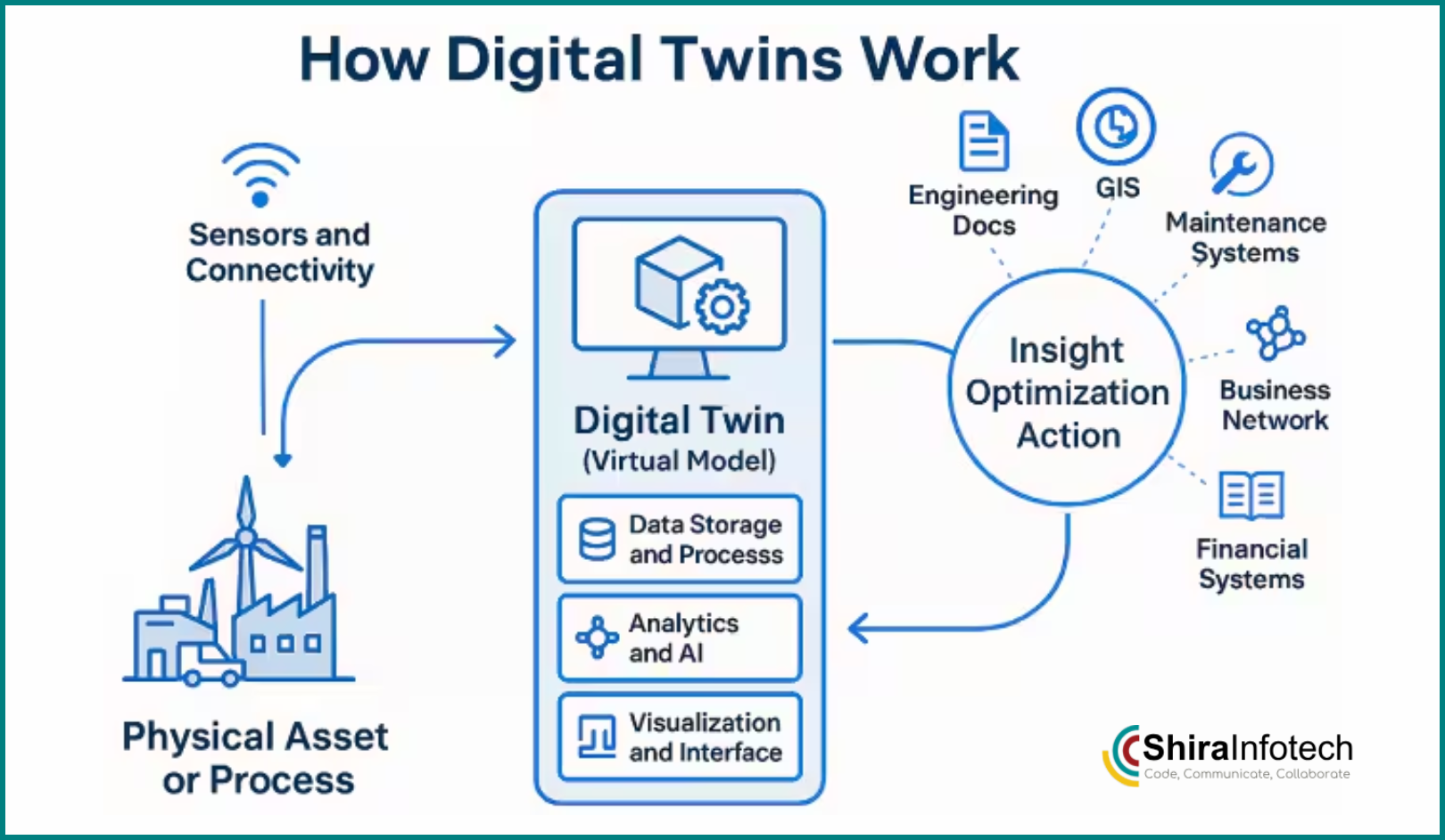
Digital Twin technology works through the integration of several advanced technologies that work together to create a dynamic virtual model.
Data Collection from Physical Systems
Sensors, IoT devices and monitoring tools collect real-time data from physical assets such as machines, equipment or infrastructure.
Data Transmission and Connectivity
The collected data is transmitted through cloud platforms, edge computing systems or industrial networks.
Digital Model Creation
A virtual model of the physical system is created using simulation software, engineering platforms or digital design tools.
Real-Time Synchronization
The digital model continuously updates based on incoming data from the physical asset, allowing it to reflect real-world behavior accurately.
Analysis and Optimization
Artificial intelligence, machine learning and analytics tools analyze the data to detect anomalies, predict failures and recommend improvements.
This entire ecosystem enables organizations to simulate scenarios, test design changes and improve performance without interrupting real-world operations.
Key Components of Digital Twin Technology
Digital Twin systems consist of several interconnected components that ensure accurate simulation and monitoring.
Physical Asset
The real-world object, machine or system being replicated digitally.
Digital Model
The virtual representation that mirrors the physical system's structure and behavior.
Sensors and IoT Devices
Sensors collect operational data such as temperature, vibration, pressure or performance metrics.
Data Integration Platforms
Cloud or edge computing platforms process and store the incoming data.
Analytics and AI Tools
Advanced analytics and machine learning algorithms analyze patterns and generate insights.
Together, these components create a dynamic feedback loop between the physical and digital worlds.
Types of Digital Twins
Digital Twin technology can be categorized into different types based on the level of system replication.
Component Twin
Represents individual components such as motors, pumps or sensors.
Asset Twin
Represents a complete machine or equipment composed of multiple components.
System Twin
Represents an interconnected system such as a manufacturing production line.
Process Twin
Represents entire operational processes, including workflows, supply chains or industrial ecosystems.
Each type helps organizations analyze performance at different levels of complexity.
Applications of Digital Twin Technology
Digital Twin technology is transforming multiple industries by enabling predictive insights and intelligent system management.
Manufacturing
Manufacturers use Digital Twins to optimize production processes, monitor machine health and reduce downtime.
Aerospace and Aviation
Aircraft manufacturers create Digital Twins to simulate flight conditions, monitor aircraft performance and improve safety.
Healthcare
Hospitals and medical researchers use Digital Twins to simulate human organs, test treatments and improve patient care.
Smart Cities
Urban planners use Digital Twins to simulate traffic patterns, energy usage and infrastructure performance.
Automotive Industry
Automobile manufacturers create Digital Twins of vehicles to test designs, analyze performance and improve safety features.
Energy and Utilities
Energy companies use Digital Twins to monitor power plants, wind turbines and electrical grids.
These applications demonstrate how Digital Twin technology is helping organizations move toward intelligent and predictive operations.
Benefits of Digital Twin Technology
Digital Twin technology provides several strategic advantages for organizations adopting digital transformation initiatives.
Predictive Maintenance
Digital Twins help detect potential equipment failures before they occur, reducing costly downtime.
Improved Product Design
Engineers can simulate product designs and test various scenarios before manufacturing begins.
Operational Efficiency
Organizations can optimize processes by analyzing performance data and identifying inefficiencies.
Cost Reduction
Digital simulation reduces the need for physical prototypes and testing.
Better Decision Making
Real-time insights help organizations make data-driven decisions faster and more accurately.
Enhanced Innovation
Companies can experiment with new ideas and innovations in a virtual environment without operational risk.
These benefits make Digital Twin technology a key enabler of Industry 4.0 and smart engineering ecosystems.
Digital Twin Technology and Industry 4.0
Digital Twin technology plays a central role in Industry 4.0, the fourth industrial revolution that focuses on automation, connectivity and intelligent manufacturing.
Industry 4.0 technologies such as:
-
Internet of Things (IoT)
-
Artificial Intelligence
-
Big Data Analytics
-
Cloud Computing
-
Simulation and Modeling
work together with Digital Twin systems to create smart factories and autonomous industrial environments.
In these environments, machines communicate with each other, predict operational issues and optimize production processes automatically.
Future Trends in Digital Twin Technology
Digital Twin technology is evolving rapidly as industries continue to adopt advanced digital solutions.
Several trends are shaping the future of Digital Twin innovation.
Integration with Artificial Intelligence
AI-powered Digital Twins will provide more accurate predictions and automated optimization.
Expansion into Smart Cities
Cities will increasingly use Digital Twins to simulate infrastructure development and urban planning.
Healthcare Digital Twins
Researchers are exploring Digital Twins of human organs to improve personalized medicine.
Metaverse Integration
Digital Twin technology will play a key role in building virtual environments for industrial and engineering simulations.
Sustainability and Green Engineering
Digital Twins will help organizations optimize energy usage and reduce environmental impact.
These innovations will make Digital Twins an essential tool for future digital ecosystems.
Why Businesses Should Learn Digital Twin Technology
As industries adopt digital transformation strategies, the demand for professionals skilled in Digital Twin technologies is increasing rapidly.
Engineers, IT professionals and data specialists who understand Digital Twin platforms can work in fields such as:
-
Smart manufacturing
-
Industrial automation
-
IoT engineering
-
Simulation modeling
-
Data analytics
-
Infrastructure management
Organizations are actively seeking professionals who can design, implement and manage Digital Twin systems.
Digital Twin Learning Opportunities with Shira Infotech
To meet the growing industry demand, many technology training organizations are offering specialized courses in Digital Twin technologies.
Shira Infotech provides industry-focused training programs designed to help professionals understand the core concepts, practical applications and future potential of Digital Twin systems.
Through structured learning modules, hands-on training and expert guidance, learners can gain the knowledge required to work with modern engineering simulation platforms and digital transformation technologies.
Training programs focus on:
-
Digital Twin fundamentals
-
Industrial simulation tools
-
IoT integration
-
Data analytics for Digital Twins
-
Real-world engineering use cases
Such programs help professionals build career-ready skills for the evolving digital engineering landscape.
Frequently Asked Questions
What is Digital Twin technology in simple terms?
Digital Twin technology is a virtual replica of a physical object or system that uses real-time data to simulate performance and behavior.
Why is Digital Twin technology important?
It helps organizations monitor systems, predict failures, improve efficiency and optimize operational performance.
Which industries use Digital Twin technology?
Digital Twin technology is widely used in manufacturing, healthcare, aerospace, automotive, smart cities and energy sectors.
Is Digital Twin technology part of Industry 4.0?
Yes. Digital Twin technology is a core component of Industry 4.0, enabling smart manufacturing and intelligent automation.
What skills are required to work with Digital Twins?
Professionals typically need knowledge of IoT systems, simulation software, data analytics, cloud platforms and industrial engineering concepts.
Conclusion
Digital Twin technology represents one of the most powerful innovations in modern engineering and digital transformation. By creating real-time virtual replicas of physical systems, organizations can monitor performance, predict failures and optimize operations with unprecedented accuracy.
As industries continue to adopt smart technologies and data-driven systems, Digital Twin technology will play a critical role in shaping the future of manufacturing, infrastructure and intelligent automation.
Organizations such as Shira Infotech are helping professionals gain the knowledge and practical skills required to understand and implement Digital Twin solutions. By learning this technology, professionals can position themselves at the forefront of the next wave of digital innovation.
Boost Your Business with Marketing Experts
Access Specialized Business Advice by Sharing Your Information.